Boston Common
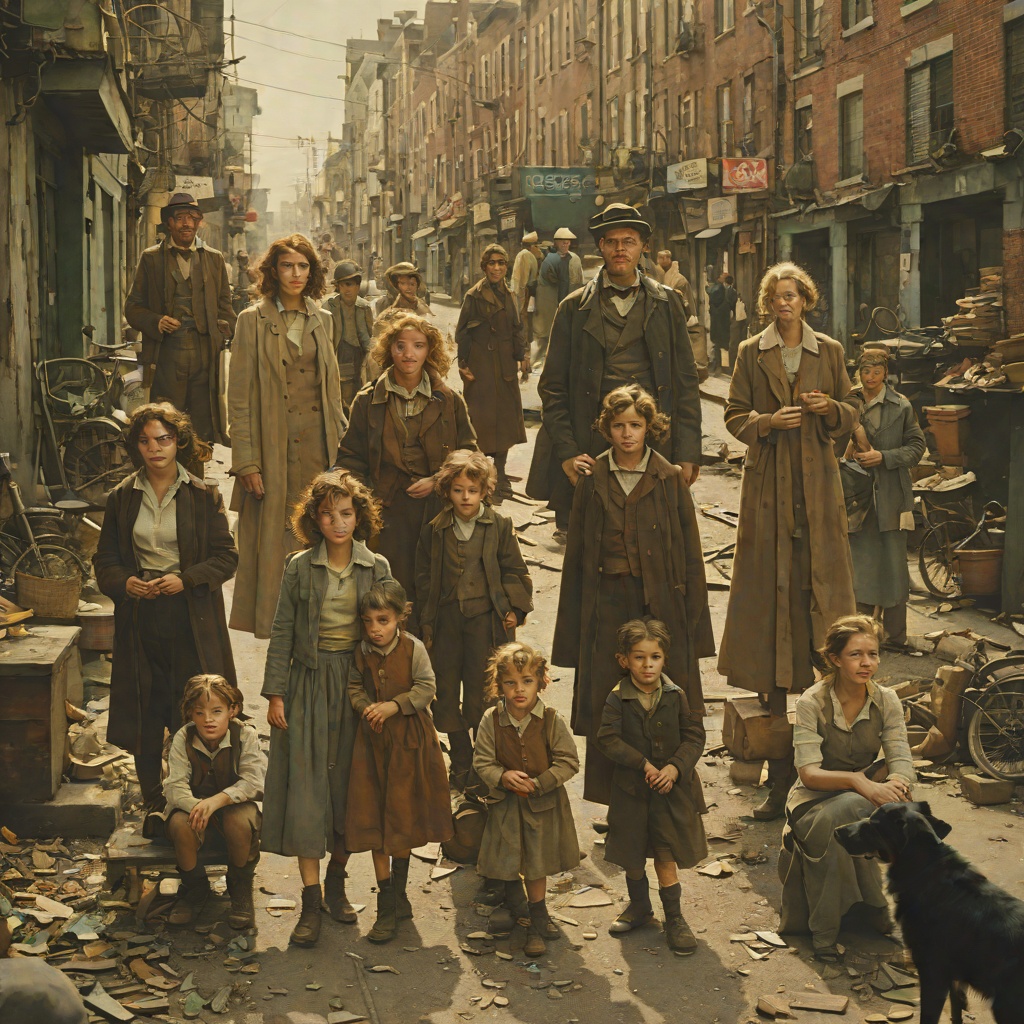
The Captain and Ann BarbaraBoston Common, the great public green at the center of the city, serves in Mary Antin's account as the stage for some of her most intimate and most symbolic American moments. It is the place where the private troubles of an adolescent immigrant girl meet the public ideals of democratic citizenship, where a bench becomes a confessional and a park becomes proof that in Boston even a child from the slums can summon a Senator to be her personal friend. The Common recurs across the narrative as a threshold space — neither the cramped domestic interior nor the formal public institution, but the open ground where the self is revealed, tested, and remade.
A Rendezvous on Boston Common
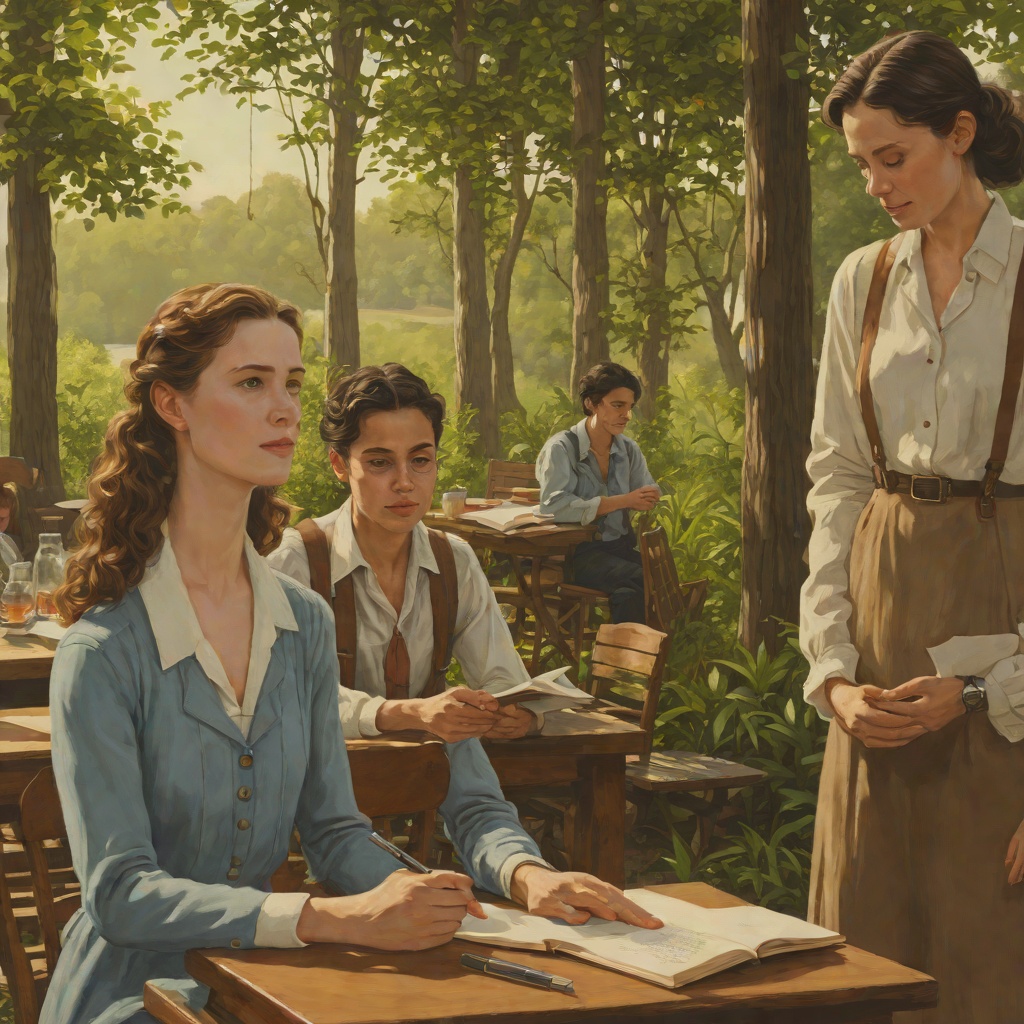
The most intensely personal scene set on the Common is the meeting Mary arranges with Miss Dillingham during her troubled adolescence. Having given up the dancing-club and ceased to know the rowdy little boys, Mary found herself writing melancholy poetry on a screechy slate, lying for hours face down on the red carpet of the parlor — a carpet the family had achieved since Chelsea days. When her sorrows grew too deep for verse or prose, she implored Miss Dillingham to come to her and hear her revelations, but insisted the meeting not take place at the house, where there was no privacy. She asked instead: would Miss Dillingham meet her on Boston Common at a certain time? Miss Dillingham, a devoted friend and a wise woman, agreed. On a gray autumn day — it may actually have been drizzling — Mary sat cold on a bench, thrilled through and through with the sense of the magnitude of her troubles and the romantic nature of the rendezvous. She made specific charges against her home, members of her family, and life in general. Miss Dillingham understood the symptoms and gave no inkling of her diagnosis; she kept a grave face, did not belittle the troubles, and did not say that Mary would get over them. Instead she told the girl it would be noble to bear her sorrows bravely, to soothe those who irritated her, and to live each day with all her might, reminding her of great men and women who had suffered and overcome their troubles by living and working. Mary went home amazingly comforted, her pettiness and self-consciousness routed by the quiet influence of Miss Dillingham's gray eyes searching hers. This scene had to be repeated many times, as Mary herself acknowledges, for anyone present at the slow birth of manhood knows that for some years one must weep and laugh out of season, stand on tiptoe to pluck the stars, love and hate immoderately, and not know what is going on in one's own heart.
A Rest Stop During the Searchlight Canvass
The Common also appears as a place of practical respite during Mary's day of selling subscriptions to the Boston Searchlight. After her encounter with Mr. Strong, who was so genuinely repentant that she could not refuse his invitation to sit and talk, Mary went out into the roar of Tremont Street and across the Common, still green and leafy. She rested a while on a bench, debating where to go next. It was past two by the clock on Park Street Church; she had had a long day already, but it was too early to quit work, with only one half dollar of her own in her pocket. It was Saturday — in the evening the landlady would come — so she must try a little longer. The Common here is the green pause in a day of rejection, the open space between the office building where she made a friend instead of a sale and the bicycle stores along Columbus Avenue where nobody wanted the Searchlight, where people made jokes about it and did not want it at any price. The bench on the Common is where the young canvasser gathers herself before continuing her rounds.
The Democratic Heart of Boston
Beyond these personal moments, the Common anchors Mary's understanding of American civic life. She describes how simple it is in Boston: a school-girl receives a ticket for the annual historical lecture in the Old South Church on Washington's Birthday, hears a stirring discourse on her country's history, and goes home with a heart bursting with patriotism. She writes a letter to the speaker, telling him how glad she is to be an American and explaining, if she happens to be a recently made American, why she loves her adopted country so much better than her native land. If the patriotic lecturer happens to be a Senator, he reads the letter under the vast dome of the State House, and it occurs to him that he and his eminent colleagues and the stately capitol and the glorious flag that floats above it, all gathered on the hill above the Common, do his country no greater honor than the outspoken admiration of an ardent young alien. The Senator replies, inviting her to visit him at the State House; and in the renowned chamber where the august business of the State is conducted, an obscure child from the slums and a chosen leader of the people seal a democratic friendship based on the love of a common flag. The Common is thus the visible ground of this democratic ideal — the hill above it holds the State House, and the park below is where citizens and their leaders meet as equals. It is the same spirit that made it natural for children in the slums to summon gentlemen from the State House to be their personal friends, and that made it even simpler to become acquainted with a man like Edward Everett Hale, the Grand Old Man of Boston, who kept open house in every public building in the city and whose colossal figure towered above eager multitudes from every pulpit and lecture platform.
The Common in the Larger Geography of Transformation
The Common belongs to a network of Boston places that together mark Mary's transformation from greenhorn to citizen. It stands in contrast to the cramped interiors of her domestic life — the parlor with its red carpet where she wrote her sad poetry, the house where there was no privacy to talk. It is the open-air counterpart to the Public Library, from which the State House is only a step, and to the Old South Church where the patriotic lectures were delivered. The Common is where the private self goes to confess, where the working girl goes to rest, and where the citizen goes to understand what it means to belong. It is, in Mary's telling, the green heart of a city that made democracy feel as natural as a park bench on a gray autumn day.